
Marcus Mosiah Garvey: Architect of Black Power and Builder of Black Industry
- Photos By Deeky

- Feb 9
- 3 min read

Marcus Mosiah Garvey was not merely a speaker, a symbol, or a dreamer of Black liberation, he was a builder of power. He understood that freedom without economic control is an illusion, and he dedicated his life to constructing institutions that proved Black people could govern, educate, feed, employ, and sustain themselves. Long before “Black ownership” became popular language, Garvey was organizing mass production, commerce, and global trade under Black control.

Born in 1887 in St. Ann’s Bay, Jamaica, Garvey traveled throughout the Caribbean, Central America, Europe, and the United States, carefully studying the conditions of Black people across the African world. Everywhere he went, he witnessed the same reality: Black labor enriched empires while Black communities remained dependent and exploited. Garvey concluded that political rights without economic power were meaningless. His response was not to beg for inclusion, but to build an independent system rooted in self-reliance, racial pride, and collective discipline.

In 1914, Garvey founded the Universal Negro Improvement Association (UNIA), which would grow into the largest mass Black organization in history. With millions of members across Africa, the Caribbean, Latin America, Europe, and North America, the UNIA functioned as a nation without borders. It operated with structure, uniforms, leadership, and international conventions, fostering a global Pan-African identity at a time when colonial powers worked tirelessly to keep Black people divided and dependent.
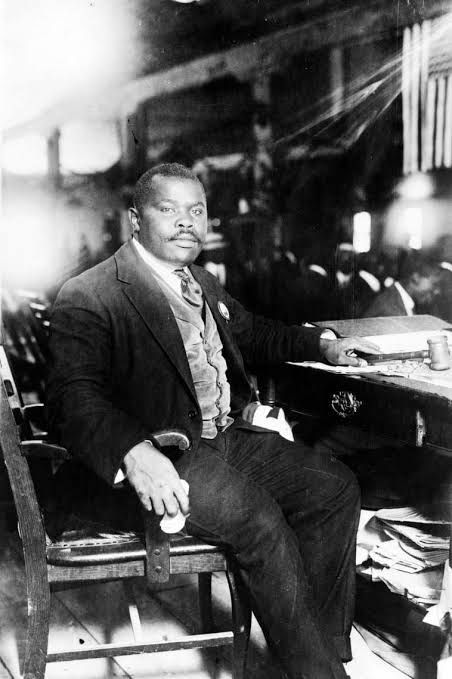
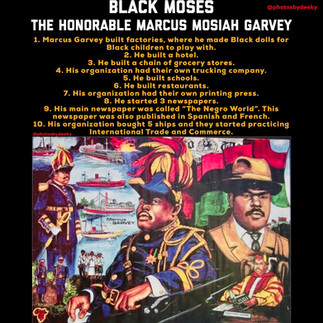
Garvey transformed the UNIA into an engine of Black economic production. Under his leadership, the organization built factories to manufacture goods for Black communities, reducing reliance on white-owned industries that profited from Black consumers while denying them dignity. The UNIA established chains of grocery stores to provide affordable food, create jobs, and circulate money within Black neighborhoods. Restaurants were opened to serve the people and demonstrate that Black-owned businesses could meet everyday needs with excellence and pride. A trucking company was created to transport goods efficiently, linking Black producers to Black consumers and strengthening internal trade networks.
Education was central to Garvey’s vision. The UNIA built schools designed to train Black children in discipline, self-respect, history, and leadership, free from colonial propaganda and narratives of inferiority. Garvey understood that a liberated economy required liberated minds, and that education must serve the interests of the people rather than the oppressor.

Control of information was another pillar of Garvey’s strategy. The UNIA operated its own printing press, ensuring total independence in messaging and political education. Garvey launched three newspapers, most notably The Negro World, which reached hundreds of thousands of readers across the globe. These publications spread Pan-African consciousness, exposed colonial exploitation, and connected Black people worldwide through a shared vision of self-determination and economic unity.
Garvey’s most ambitious economic project was the Black Star Line, a Black-owned shipping company designed to establish international trade and commerce among African people. Through the UNIA, five ships were purchased to transport goods and people across the Atlantic world, linking the United States, the Caribbean, Central America, and Africa. The Black Star Line symbolized sovereignty, mobility, and global Black enterprise in an era when maritime trade was tightly controlled by colonial powers. It was a direct challenge to white economic dominance and a declaration that Black people had the right to participate fully in global commerce on their own terms.

Garvey’s success made him a target. He was surveilled, undermined, prosecuted, imprisoned, and eventually deported by the U.S. government, not because he failed, but because he succeeded in organizing millions and building institutions that threatened the racial and economic order. His real crime was teaching Black people to rely on themselves and proving that they could do so at scale.
Marcus Garvey left behind more than rhetoric, he left a blueprint for liberation. He demonstrated that Black power is not abstract; it is constructed through factories, schools, businesses, media, transportation, and global trade. His life stands as a permanent reminder that respect follows power, and power is built through organized economic independence. Garvey did not wait for freedom to be granted. He built it with his people, for his people, and for generations to come.



Comments