
Babylon’s Silence: Why Bob Marley Is Still Not a National Hero
- Photos By Deeky

- Jan 3
- 3 min read

Bob Marley deserves to be named a National Hero of Jamaica, the country’s highest honor, not as a symbolic gesture, but as a historical correction. His contribution to Jamaica, to Africa, to the Black world, and to oppressed people globally eclipses that of many already enshrined in the nation’s official pantheon. Bob Marley was not merely an entertainer; he was a revolutionary voice, a cultural general, and a global ambassador for Black liberation, anti-imperialism, and spiritual resistance. The refusal to grant him National Hero status is not accidental, it is political.
Bob Marley carried Jamaica to every corner of the earth. Through reggae, he internationalized the struggles of poor Black Jamaicans, turning local suffering into a global language of resistance. Songs like Get Up, Stand Up, Burnin’ and Lootin’, War, Redemption Song, and Africa Unite were not neutral music; they were ideological weapons. Bob Marley educated the masses about Babylon, colonialism, racism, police brutality, and African self-determination long before these conversations became mainstream. He made Jamaica synonymous with resistance, dignity, and Black pride. No Jamaican figure has done more to shape the world’s understanding of the island.


Beyond music, Bob Marley’s humanitarian work embodied the principles he preached. He consistently used his platform, resources, and influence to uplift the poor and dispossessed. Marley gave generously to schools, community projects, and individuals in need, often quietly and without publicity. He employed and supported people from Kingston’s ghettos, ensuring that economic opportunity flowed back to the same communities that shaped his consciousness. His life reflected a deep commitment to collective uplift, not individual wealth.
Bob Marley’s humanitarianism reached its peak during moments of political violence and social fracture. In 1978, at the One Love Peace Concert, Marley physically united rival political leaders Michael Manley and Edward Seaga on stage, risking his life to call for peace among the masses. This was not symbolism, it was active intervention in a nation bleeding from state-backed political warfare. Earlier, after surviving an assassination attempt in 1976, Marley still performed at the Smile Jamaica concert, placing the well-being of the people above his own safety. These actions alone reflect a moral courage worthy of national heroism.


Internationally, Marley stood with liberation movements and oppressed nations. He performed in Zimbabwe in 1980 to celebrate the country’s independence from white minority rule, rejecting elite comfort to stand with newly freed Africans. He aligned himself with Pan-Africanism, anti-apartheid struggles, and global calls for justice, using reggae as a vehicle for humanitarian solidarity. His music fed the spirit of resistance for prisoners, freedom fighters, and poor communities worldwide, offering hope where institutions had failed.
Yet despite this record of humanitarian leadership, Bob Marley remains excluded from Jamaica’s highest honor. The reason is clear: his Rastafarian beliefs.
Rastafari has always been criminalized, demonized, and violently suppressed by the Jamaican state. For decades, Rastas were beaten, imprisoned, fired from jobs, denied education, and harassed by police simply for wearing locks, practicing their faith, and rejecting colonial Christianity. The Coral Gardens massacre of 1963 stands as a brutal reminder of how the Jamaican government unleashed terror against Rastafarians—arbitrary arrests, torture, and death—under the false banner of “law and order.” This violence was systemic, not accidental.

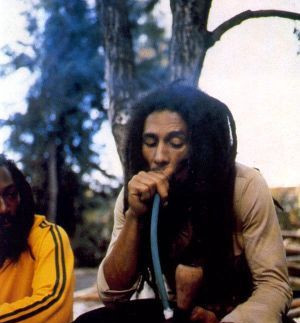


Bob Marley was a proud Rasta who refused to dilute his faith for state approval. He openly rejected Western imperialism, praised Haile Selassie, aligned with African liberation movements, and exposed the hypocrisy of post-colonial Jamaica—a nation politically independent yet spiritually and economically colonized. To officially honor Bob Marley would force Jamaica to confront its historic persecution of Rastafarians and the revolutionary ideas they represent. That is a reckoning the state has long avoided.
Many National Heroes were safe figures to canonize figures whose radical edges could be softened for textbooks and ceremonies. Bob Marley cannot be sanitized. His legacy is a direct challenge to Babylon itself: to inequality, state violence, neocolonial exploitation, and cultural repression. Naming him a National Hero would require truth, accountability, and humility.
Bob Marley already belongs to the people. He belongs to the ghettos of Kingston, the villages of Africa, and the freedom struggles of the world. Jamaica profits endlessly from his image while withholding the honor he earned through sacrifice, service, and unwavering commitment to humanity. That contradiction is an injustice.
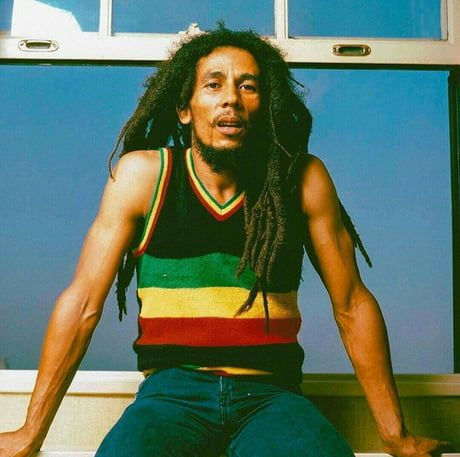
History will not be fooled by official silence. Bob Marley is a National Hero in fact, in spirit, and in the hearts of the people. Until Jamaica confronts its injustice toward Rastafarians and revolutionary Black consciousness, its highest honors will remain incomplete. Bob Marley didn’t just sing for the people, he lived for them, fought for them, and bled for them.


Comments