
“A Silent Genocide is Happening in Congo”
- Deeky

- Dec 9, 2025
- 3 min read

The Democratic Republic of the Congo is experiencing a crisis that many survivors, activists, human rights groups, and government officials identify as a genocide. The current wave of violence in eastern Congo is not an accidental outcome of war but a systematic campaign marked by mass killings, ethnic targeting, forced displacement, sexual violence, and the destruction of entire communities. The severity and consistency of these abuses demonstrate a clear intent to destroy specific populations, making it increasingly impossible to ignore the genocidal nature of what is unfolding.
Armed groups, particularly the M23 rebellion, have launched coordinated assaults across North Kivu and South Kivu provinces, deliberately targeting civilians and wiping out entire villages. In July 2025, more than 140 civilians—mostly belonging to the Hutu ethnic group—were executed by M23 forces near Virunga National Park. These killings were not random acts of violence but organized massacres carried out across multiple farming villages. Civilians were bound, tortured, and executed in groups, while others were hunted as they attempted to flee. Such systematic and ethnically targeted killings exhibit the very patterns that define genocide.

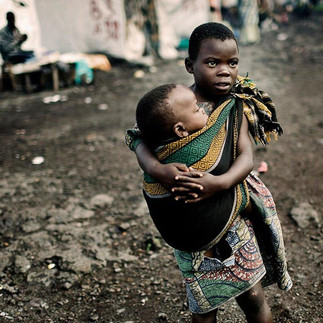


The crisis is further intensified by the massive displacement of the Congolese people. Millions have been forced from their homes, pushed into overcrowded camps, or driven across borders as armed groups clear territories through fear and violence. M23 has even forcibly deported civilians into Rwanda, an act that further breaks communities and strips people of their homes, culture, and identity. These population-clearing tactics, paired with mass killings, demonstrate an intent to remove ethnic groups from their land and erase their presence in the region. The destruction of homes, farmlands, and social structures is part of a broader campaign to dismantle these communities physically, culturally, and economically.
Sexual violence has become a weapon of terror, used intentionally to break families, humiliate communities, and inflict deep psychological wounds. Women, girls, and even children are subjected to horrific brutality during attacks on villages or while fleeing conflict zones. Survivors are often left without medical care, support, or protection from further abuse. The use of rape in eastern Congo is not incidental; it is a deliberate strategy of domination and destruction that contributes directly to the genocidal environment. Hospitals have been destroyed, healthcare systems have collapsed, and communities lack all basic forms of protection, deepening the trauma that defines daily life for millions of Congolese people.

At the core of this violence lies another powerful force: the global demand for cobalt, a mineral essential to the batteries in smartphones, iPhones, laptops, and electric vehicles. Eastern Congo contains some of the world’s richest cobalt reserves, and control of these mines is a primary driver of the conflict. Armed groups fight to dominate mining regions, using violence to secure resources that have become indispensable to the global technology industry. Communities living on cobalt-rich land are terrorized, displaced, or killed so that mining operations can continue without resistance. This connection between mineral extraction and mass violence means that the genocide-like conditions in the Congo are directly linked to the global supply chain.
The cobalt extracted from Congolese mines, often by children and adults working in dangerous, unregulated conditions, generates billions in profit for companies like Apple, Tesla, Samsung, and other technology and electric-vehicle giants. While miners earn only a few dollars a day, corporations benefit immensely from the low cost of Congolese cobalt. Investigations have repeatedly shown that minerals mined under abusive, exploitative, and deadly conditions find their way into global markets through complex networks of contractors and suppliers. The human suffering embedded in these minerals is hidden, but it fuels staggering corporate profits. This reality exposes a form of modern-day colonial exploitation that sustains the violence and deepens the humanitarian crisis.
The Congolese government, along with civil society leaders, has repeatedly called on the world to recognize this crisis as a genocide. President Félix Tshisekedi has described the situation as a “silent genocide” and urged the international community to act. However, global response has been slow and grossly inadequate. Accountability for perpetrators remains rare, humanitarian aid is underfunded, and millions of displaced people live without the basic necessities of survival. Each day the world fails to intervene, the violence intensifies, and more lives are destroyed.
The combination of mass killings, targeted ethnic violence, forced displacement, sexual terror, and the exploitation of Congo’s mineral wealth forms a clear and compelling argument that a genocide is occurring. This is not merely a conflict; it is an orchestrated destruction of people and communities, made worse by the world’s reliance on the resources that fuel the violence. Without urgent international action, recognition, and a fundamental rethinking of the global cobalt supply chain, the genocide in the Congo will continue unchecked. The suffering of the Congolese people is immense, and the world must confront its role in allowing this atrocity to continue.


Comments